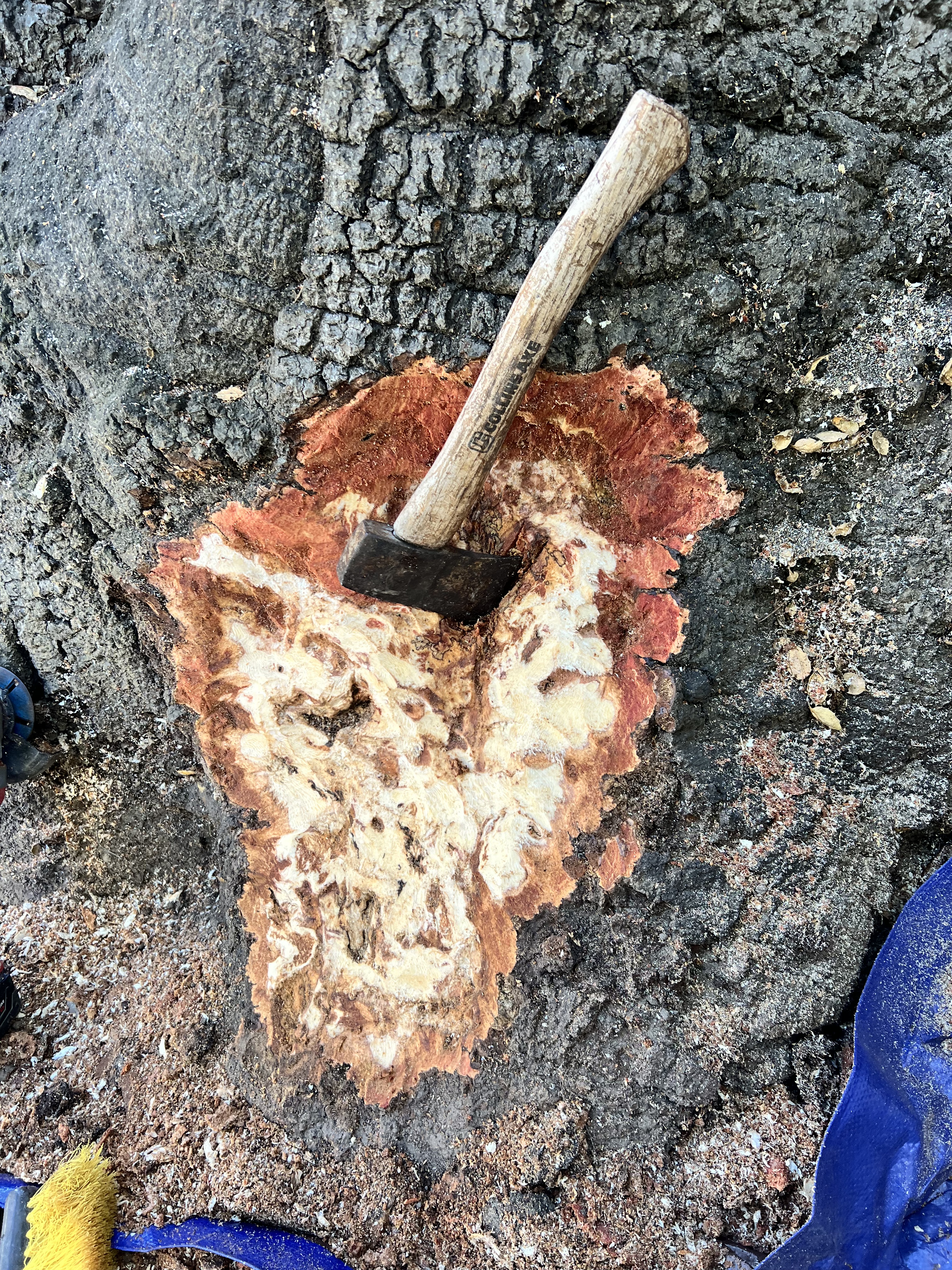
Happy Halloween! Today’s canker surgery on a ghost (coast) live oak gave off a real Halloween vibe. The surgery was gruesome, deep pockets of dark, discolored diseased tissue spreading inside a centuries-old oak. Let me take this grisly opportunity to show how I’ve been able to remove potentially deadly stem canker infections in oaks.
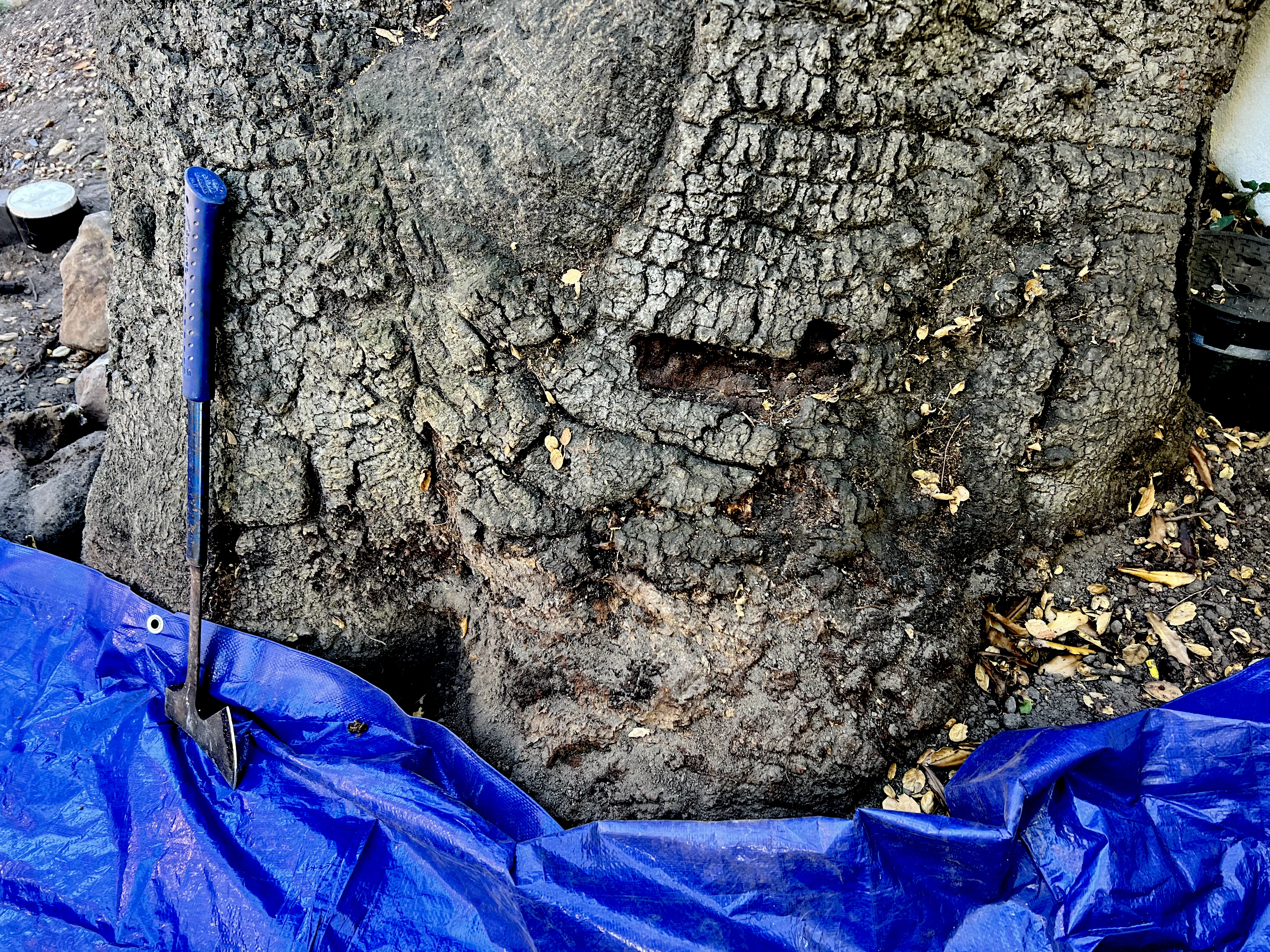
The first steps are to gather the necessary tools (large axe, small axe, multitool, grinder w/ cutting edge), sterilize the tool cutting surfaces with a blow torch, and prepare the surgical area to collect the diseased tissue. I’ve already identified, roughly, the extent of the canker by observing the areas of bleeding, as seen above in the lower trunk just to the left of center.

Donning gloves, hat, and eye protection I began the surgery using a large chopping axe with a two-foot handle. For surgeries I prefer to use chopping axes, which have narrower heads than splitting axes. My initial efforts are to find the limits of the infection so as to isolate it from the rest of the tree. In the above photo the dark-colored diseased tissue is clearly visible in the center of the image. The reddish tissue is healthy bark, and the white tissue is healthy wood. I sometimes say “the redder the better” and “wood is good”.
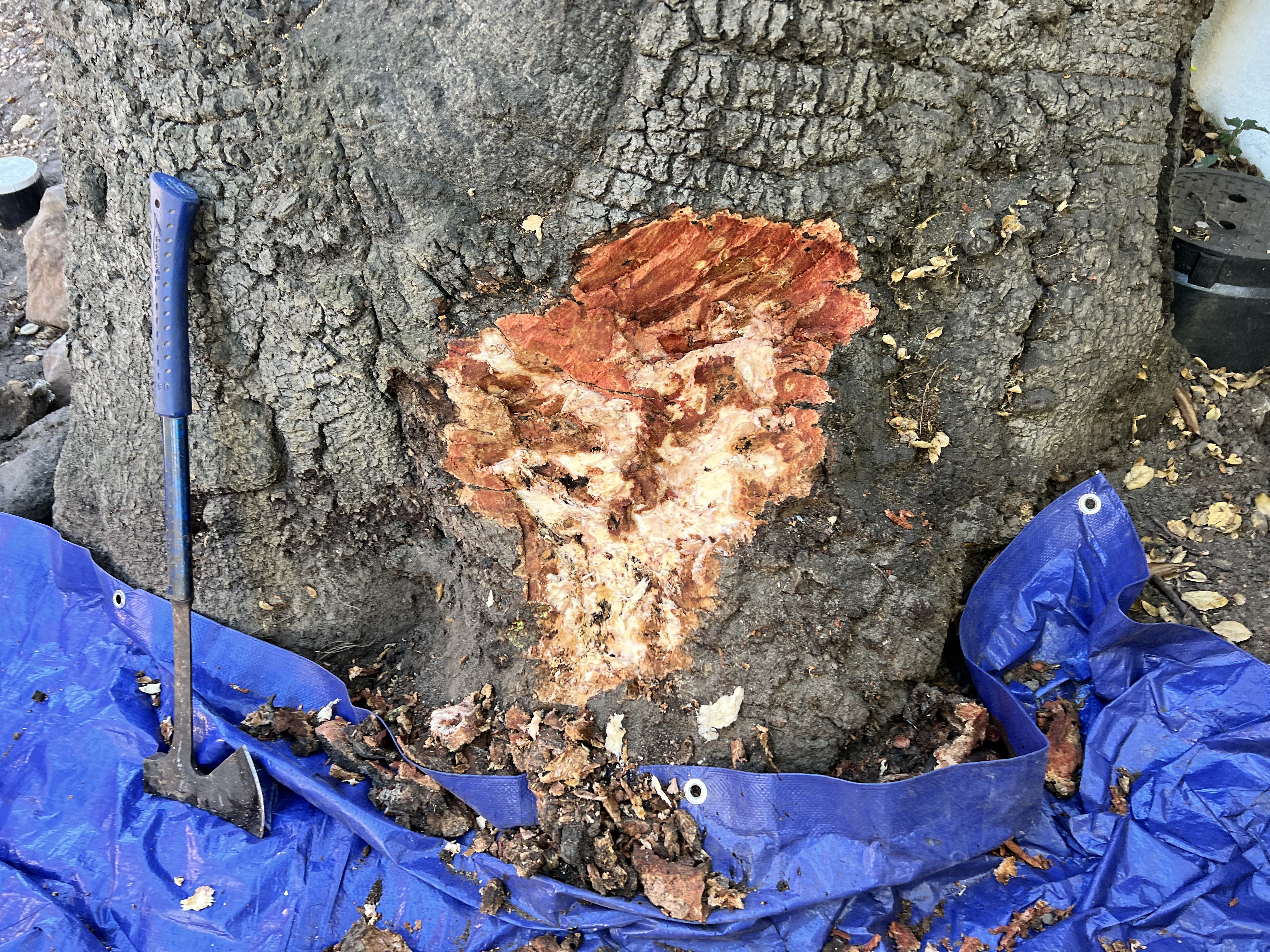
I’m usually able to remove the bulk of the diseased tissue with the large axe. Still there are remaining pockets of infection that require further work.

I then use a grinder fitted with cutting blades to further excavate and remove diseased tissue. The focus here is on finding the limits of the infection, ensuring only reddish, healthy tissue encompasses the canker.
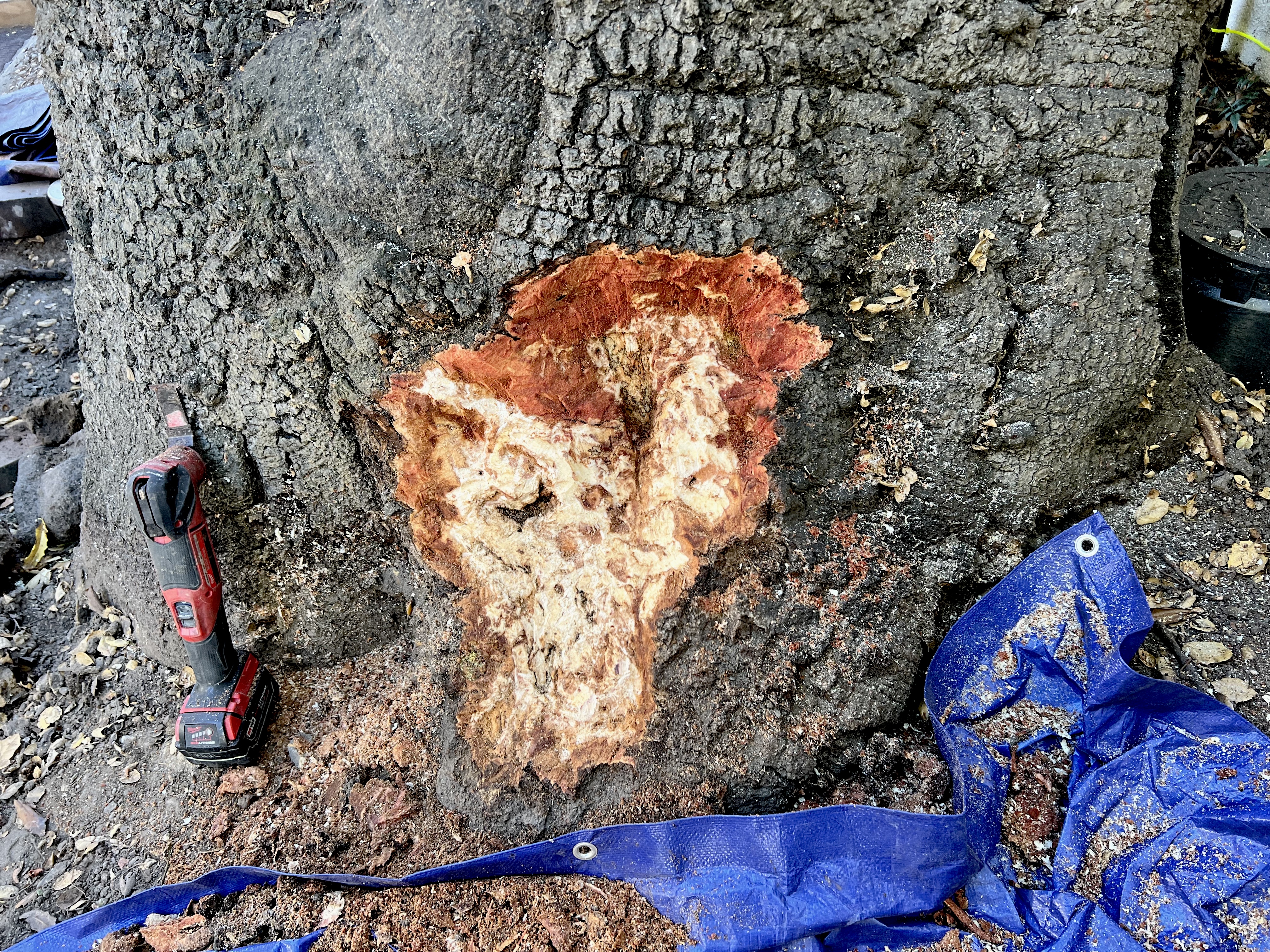
This is followed by a multitool, which is excellent at excavating deep pockets of infection.
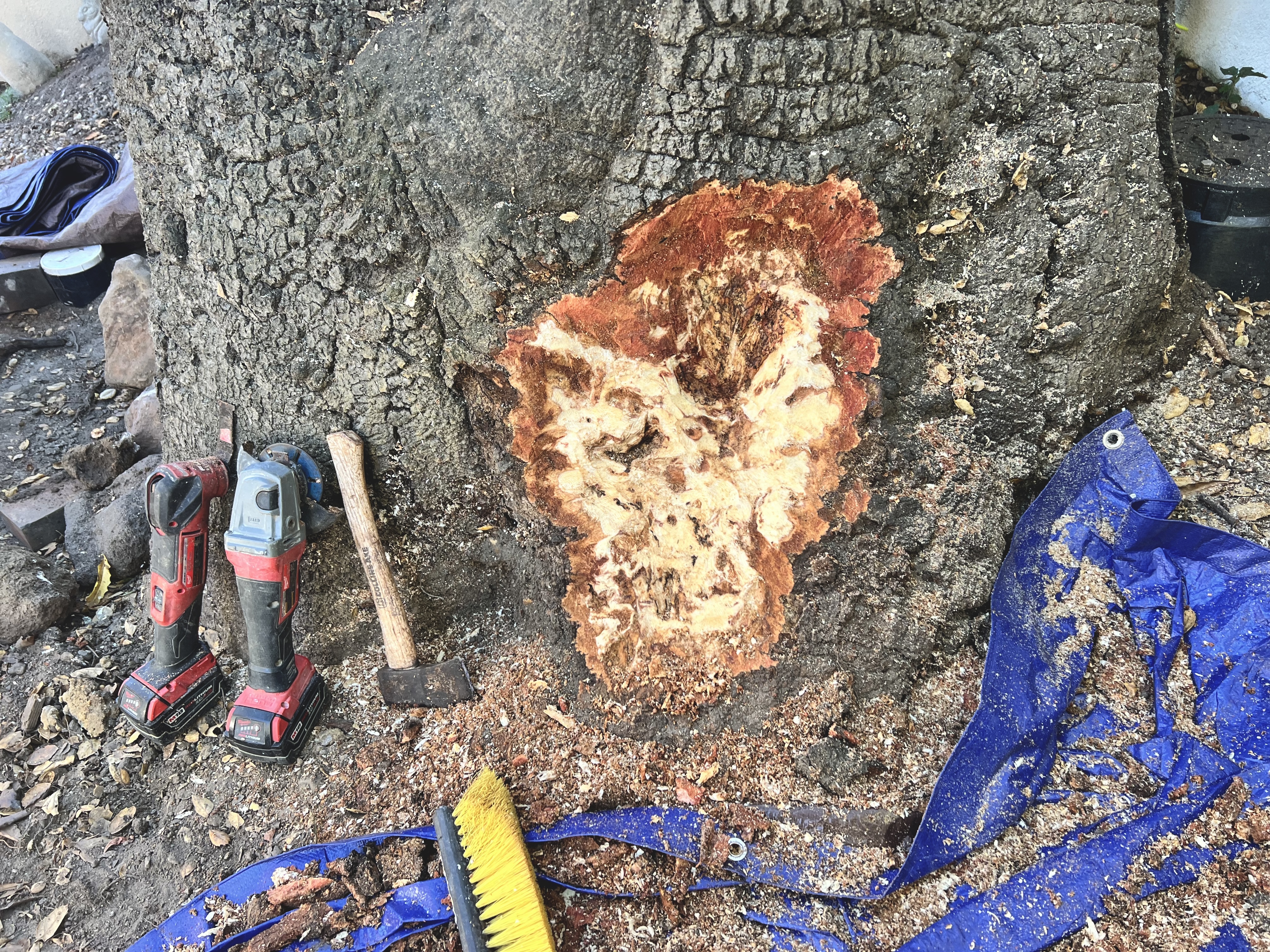
I finish the surgery with a combination of tools: grinding cutter, multitool, and small (12″ handle) chopping axe. The few dark-colored areas which may contain diseased tissue are isolated from the cambium by the light-colored wood, so will not likely spread to any adjacent healthy tissue. I also smooth the wound surface so that the effect of the following cauterization procedure is more evenly distributed.
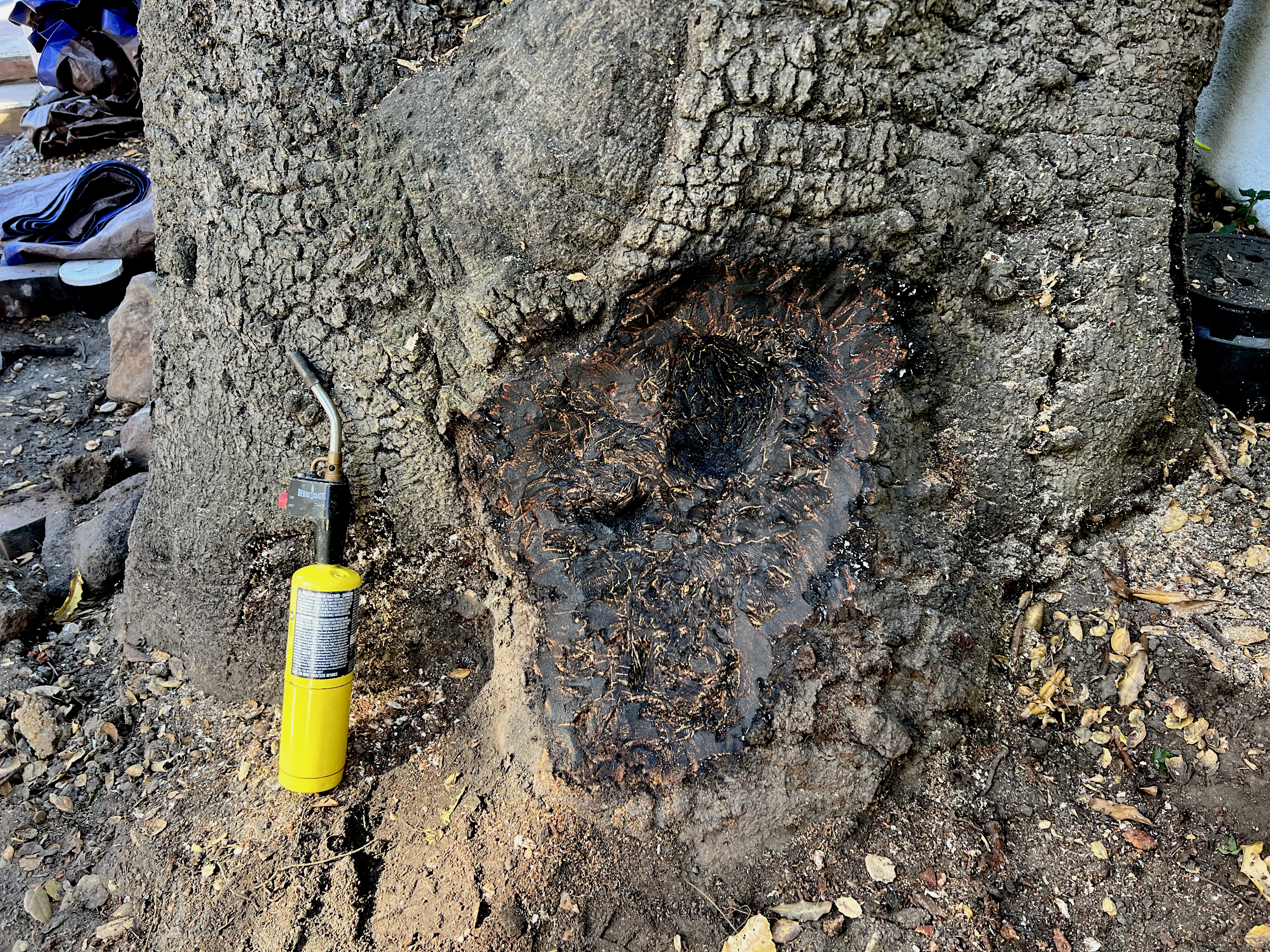
Cauterization of tree wounds, including cuts from pruning, helps the healing in several ways. First, it stimulates the remaining living tissue to initiate regenerative scar formation over the wound. Second, the intense torching helps to sterilize the wound and eliminate remaining pockets of infected tissue. Thirdly, the charring of the wound surface creates environments unfavorable for pathogenic infection. Cauterization should only be done with a nearby source of water or a fire extinguisher. Certain kinds of disease infections, which involve heart rot or “punky” wood, should NOT be cauterized as ignition of these tissues can be difficult to extinguish.
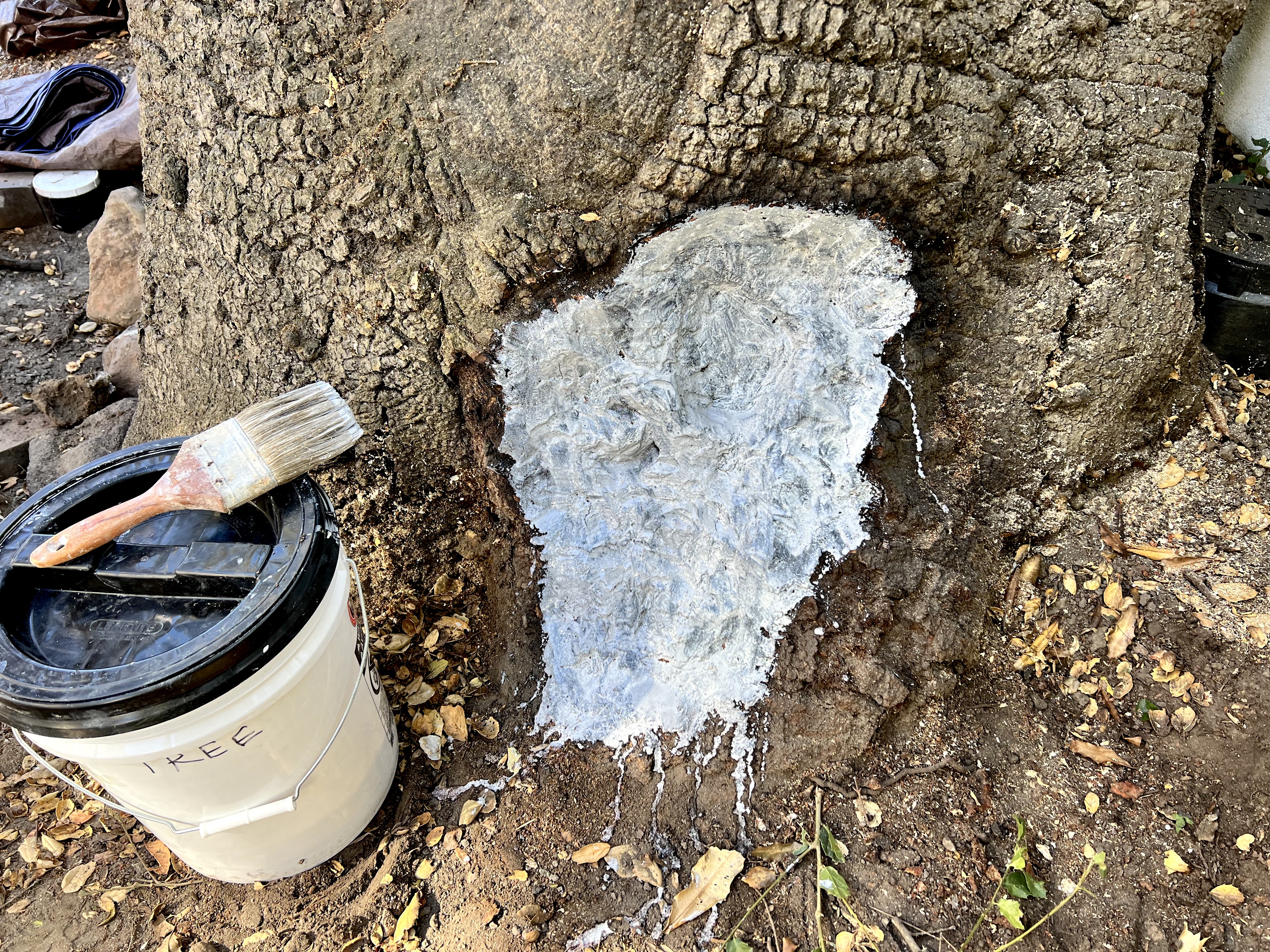
The final step of the surgical protocol is the application of a limewash poultice to the wound. Limewash creates an extra barrier against diseases and insects pests. It’s bright white appearance helps to highlight any lingering infections that appear in the future. But this single surgery, whether successful or not, still requires that the issues causing the canker infection also be addressed.
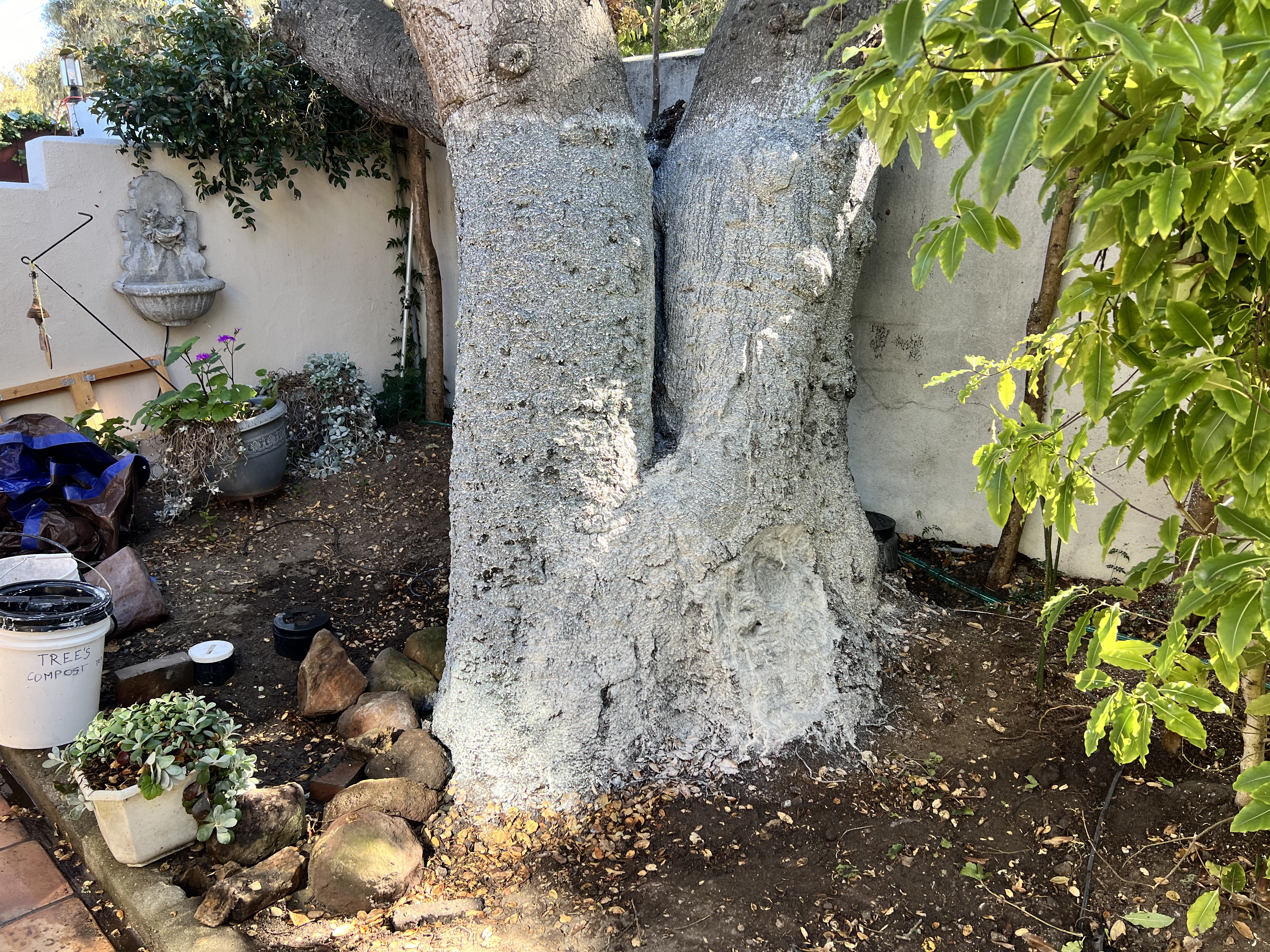
Thus, not only was the wound treated, but the entire base of the trunk was limewashed. In addition, compost tea, alkaline-rich minerals, and biochar were spread on all the soils around the oak, and then watered in. This is what we call fire mimicry.
I’ll report back next Halloween . . .


Leave a comment